Brand-neutral
We don't make robots. We pick the arm and the gripper that fit your line. If your products change, the cell can change with them.
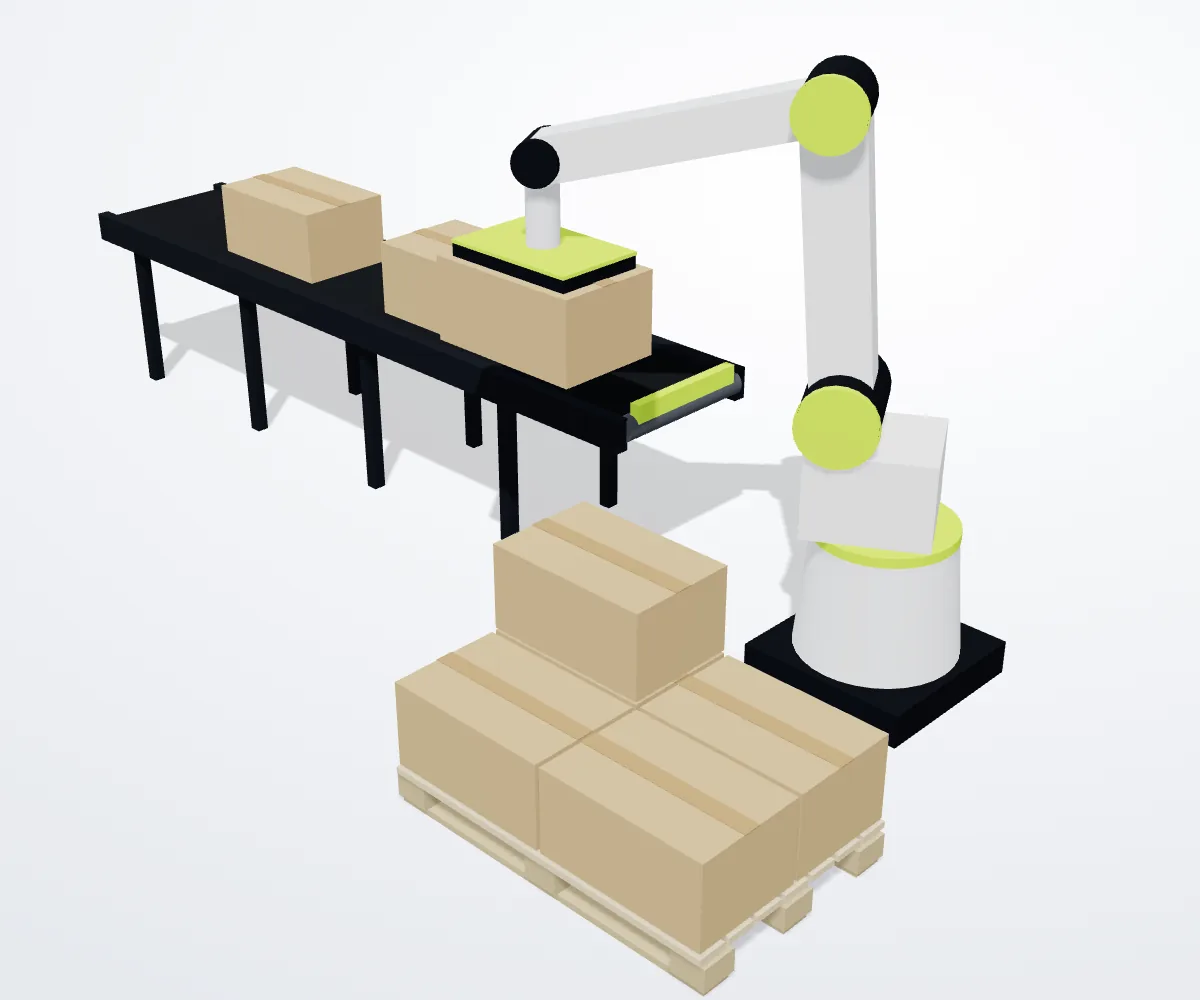
Roboyee is a new operator for mid-size food producers and co-packers. We plan to set up, run and service a standard robot cell at the end of your line. One fixed monthly fee covers it. You don't buy the robot.
We are looking for a few pilot partners. There is nothing to buy yet.
64%
of firms in the Netherlands report staff shortages
30%
of all Dutch firms are responding with more automation
35%
of EU firms with 50 to 249 staff that use industrial robots say hiring problems are part of the reason
1 in 10
EU firms with 50 to 249 staff use industrial robots at all
The problem
Picture the night shift. The line keeps running. At the end, two people lift case after case onto a pallet, hour after hour. One of them came from an agency this week. If someone calls in sick, the line slows down.
Many plants know a robot could do this job. But buying one is a big step. The plant carries the cost, the setup, the risk that output is lower than planned, and the breakdowns.
We want to take that risk off the plant.
What we do
This is how we plan to work. You keep running your plant. We take care of the cell at the end of the line.
First from a short video and a floor plan. Then on site, together with a local partner.
Chosen for your cases, your pallet patterns and your line speed. Not taken from one maker's catalogue.
An experienced integrator near you installs the cell and issues the CE declaration for it.
We monitor the cell remotely on every shift. When a part needs hands, local service comes on site.
A fixed monthly service fee. Installation, maintenance, monitoring and repairs are on us. You don't buy the robot.
Why us
We don't make robots. We pick the arm and the gripper that fit your line. If your products change, the cell can change with them.
You don't buy the robot. Setup, maintenance, monitoring and breakdowns are ours to handle. If the cell stands still, that is our problem first.
A three-month paid pilot on one line. We agree the success measures with you on paper before anything is installed.
One contact for the cell, the service partner and the data. You don't manage three suppliers.
We show you the cost estimate line by line. If people are cheaper for your line, we will tell you.
How a pilot would work
We ask how your end of line works today. No slides, nothing to buy.
Video and floor plan, then a site visit with the integrator.
Scope, safety roles, success measures and the monthly fee, all on paper.
The integrator builds the cell. We test it with your cases before it goes live.
We run the cell on your shifts and report what it did.
Continue, change the setup, or remove the cell.
Before anything is installed: supplier quotes, a safety review and a signed pilot agreement must be in place.
Where we are today
There is no cell running yet. This winter we are speaking with operations people at food producers and co-packers, and with integrators. We want to build this with a few pilot partners who have real lines and a real staffing problem.
| Item | Status |
|---|---|
| Talks with plants and integrators | Under way |
| Local integrator and service partners | Being selected |
| Legal review: safety, liability, data | Planned |
| EU company | To be registered |
| First cell running | Not yet |
Who we are looking for
Questions
No. We work with standard arms and cells from established makers. A local integrator builds and installs them.
A fixed monthly service fee for the cell. It covers installation, maintenance, remote monitoring and repairs. You don't buy the robot. We agree the fee in writing for each line, so we don't publish prices.
Our current plan: the integrator who builds the cell issues the CE declaration. You keep your workplace risk assessment, as with any machine. We own and service the cell, and we only change non-safety settings remotely. A lawyer is checking this structure, so please read it as our plan, not a final answer.
We see it remotely and fix what can be fixed remotely. If a person is needed, the local service partner comes to your site. Response times are agreed in the pilot agreement.
Not today. We don't have a cell running yet, so we won't promise a number. Targets, and what happens if they are missed, go into the written pilot agreement.
Machine data the cell reports, such as running time, stops and alarms. What we collect, and who can see it, is agreed with you in writing. Where a works council needs to approve, we follow that process.
The founder, Orxan Musayev, is based in Tbilisi, Georgia. We plan an EU-registered company and a local service partner in each country we work in. Neither is in place yet.
Contact
A 20-minute call is the easiest start. We will ask how your end of line works today. There is nothing to buy.
Book a 20-minute callChoose Gmail, Outlook, LinkedIn, WhatsApp or simply copy the email address.
Opens in a new tabWrite to Orxan Musayev. The draft opens with the subject filled in.